
WHAT YOU NEED TO KNOW
Traveling with a single carry-on bag is the core of packing light: the essentials include keeping your luggage under 20 pounds to provide unmatched mobility and peace of mind.
- The One-Week Rule: Pack garments for only seven days of travel, regardless of whether your trip lasts two weeks or three months.
- Weight Limits: Restrict your packed suitcase to a maximum weight of 20 pounds (or 9.1 kilograms) to comply with airline restrictions.
- Liquid Regulations: Replace traditional liquid toiletries with solid alternatives to easily pass through security checkpoints.
Your success with this setup depends entirely on your willingness to wash clothes regularly during your trip.
What Are the Core Rules of Packing Light: The Essentials?
Traveling light is not about deprivation, but about maximizing your freedom. When you carry a compact bag, you bypass long lines at the luggage carousel, avoid steep checked bag fees, and navigate public transportation with absolute ease. To achieve this, you must shift your perspective from packing for every potential emergency to packing only for the most probable situations.
Why Should You Pack for Only One Week?
You should pack for exactly seven days of travel, even if your itinerary spans three weeks or three months. This strategy works because you will wash your clothes periodically during your trip. By capping your wardrobe at a one-week supply, you ensure that your baggage remains lightweight and manageable. It prevents you from hauling heavy, unused garments over train platforms and cobblestone streets.
How Do You Prioritize Versatile, Multi-Use Items?
Every item inside your suitcase must perform at least two functions to justify its space. For example, a sarong can serve as a beach towel, a light blanket, or a shoulder cover-up for historic sites. Choose a single pair of neutral walking shoes that work for city exploration and casual dinners. If a piece of gear only serves one highly specific purpose, leave it at home and rent it at your destination if needed.
How Do You Choose the Right Lightweight Luggage?
Your luggage itself should weigh no more than five pounds (or 2.3 kilograms) when empty. Choose a soft-sided carry-on bag or a travel backpack measuring no more than nine inches by 21 inches by 14 inches. This size complies with major airline overhead bin specifications, though you should verify specific dimensions for European regional carriers. A soft bag also compresses easily into tight spaces, making it superior to rigid hardshell suitcases.
What Is the Ultimate Pack-Light Wardrobe Strategy?
Your clothing choices represent the heaviest and bulkiest items in your bag. By implementing a systematic approach to what you wear, you can significantly reduce your travel load. This strategy ensures you remain comfortable and presentable without overpacking.
How Does the 1-2-3-4-5-6 Clothing Rule Work?
This simple mathematical formula limits your total clothing items to 21 pieces, which easily fit into a standard carry-on. The rule dictates the maximum quantities of each garment type you should pack for your journey. This structured approach prevents impulse packing and keeps your suitcase highly organized.
- One hat or cap for sun and rain protection
- Two pairs of shoes, including one worn during transit and one packed
- Three pairs of pants, shorts, or skirts
- Four shirts, prioritizing lightweight and easily layered tops
- Five pairs of socks made from moisture-wicking materials
- Six pairs of underwear that dry quickly after washing
Why Is Choosing Lightweight, Quick-Drying Fabrics Vital?
Heavy cotton garments retain moisture and odors, making them highly impractical for travel. Instead, select clothing made from merino wool, nylon, or polyester blends. Merino wool resists odor naturally for multiple days, while synthetic polyesters dry within hours of washing. This allows you to wash garments in your hotel sink and hang them to dry overnight.
How Do You Build a Color-Coordinated Micro-Wardrobe?
Select a cohesive color palette of three colors, such as navy, grey, and white, so that every top matches every bottom. This color-coordinated system allows you to create over 12 unique outfits from just a few basic pieces. Stick to solid colors and simple patterns, which are easy to dress up or down with minimal accessories. This visual versatility keeps you looking fresh without requiring a large volume of clothing.
What Belongs on the Essential Packing List?
An organized packing list ensures you do not forget critical items while filtering out unnecessary weight. Your inventory should focus strictly on the core necessities. By separating your gear into clear categories, you can audit your progress before zipping the bag.
What Are the Key Travel Clothing Essentials?
Your travel wardrobe should focus on high-quality layers rather than bulky individual coats. Pack an ultra-light windbreaker or rain jacket that compresses to the size of an apple. Include a lightweight fleece or sweater for cooler evenings, which you can wear on the airplane to save luggage space. Remember to wear your heaviest items, including your sturdiest walking shoes, during transit days.
How Do You Pack Minimalist Toiletries and Personal Care?
To avoid security delays, replace liquid toiletries with solid alternatives wherever possible. Solid shampoo bars, solid deodorant, and toothpaste tablets do not count toward airport liquid limits. According to official guidelines from the Transportation Security Administration (TSA), liquids must be limited to small containers under 3.4 ounces (or 100 milliliters). Keep in mind that you can easily purchase basic personal care items like toothpaste or sunscreen at any local grocery store once you arrive.
Which Travel Gear and Electronics Are Must-Haves?
Limit your electronics to a smartphone, a universal travel adapter, and a compact power bank. Leave bulky laptops and dedicated cameras at home unless they are absolutely necessary for your work. Keep essential documents, like your passport and physical backup copies of insurance, in a secure, water-resistant pouch. If you struggle with travel-related anxiety, adopting simple habits for less stress can help keep your mind clear during busy transit days.
Which Smart Packing Techniques Keep You Organized?
How you arrange your items inside the bag is just as important as what you choose to bring. Utilizing efficient organization methods maximizes your available volume and prevents wrinkles. These techniques also make it easy to locate specific items without unpacking your entire suitcase.
How Do You Use Packing Cubes and Organizers?
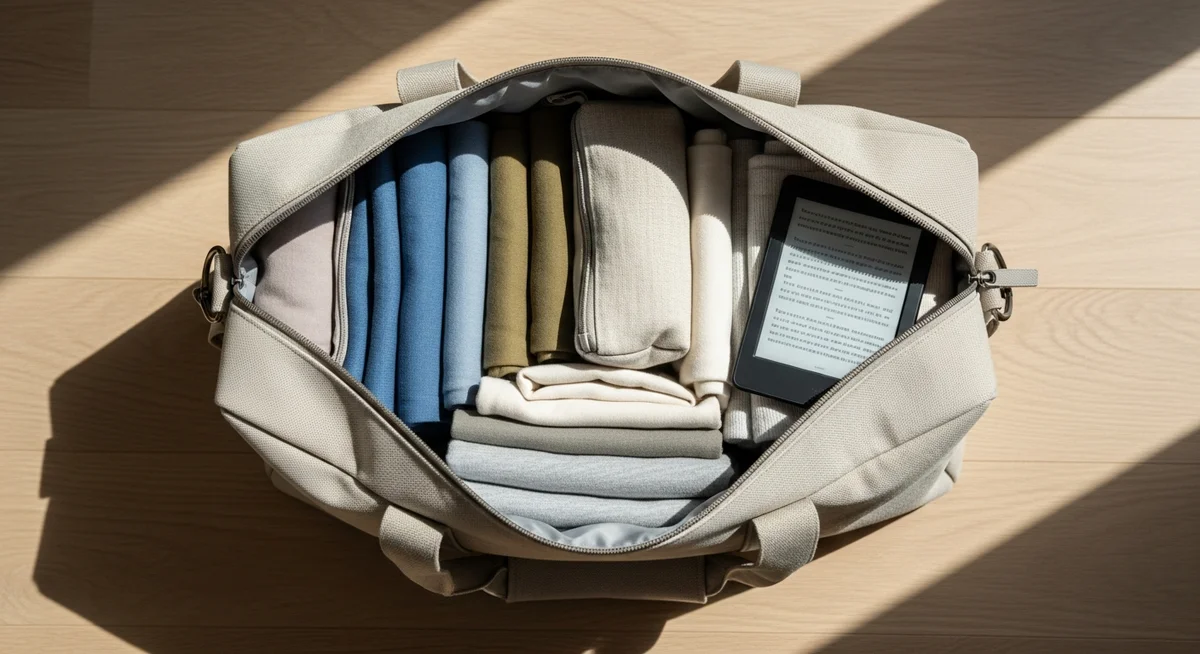
Packing cubes are fabric containers that compress your clothing and group similar items together. Use one cube for shirts, one for pants, and a mesh bag for underwear and socks. This system prevents your clothes from sliding around and creating bulk during transit. It also allows you to unpack your entire bag into hotel drawers in less than 10 seconds.
What Are the Pros and Cons of Rolling vs. Folding Clothing?
Rolling clothing is generally superior to folding because it eliminates air pockets and reduces fabric creasing. Tightly rolled shirts and pants can be tucked into the perimeter of your suitcase to maximize space. However, structured items like blazers or heavy linen shirts should still be folded flat to maintain their shape. For maximum efficiency, use a specialized folding board to pack delicate garments before placing them in your bag.
How Do You Plan for Laundry on the Road?
Doing laundry is the single most important habit that enables you to travel with a small suitcase. Pack a travel clothesline and a few packets of concentrated laundry soap sheets. You can easily wash a few items in your hotel bathroom sink in under five minutes before bedtime. For larger loads, search for local self-service laundromats or use affordable wash-and-fold services near your accommodation.
How Do You Run a Final Check and Trim Down Your Load?
The final step of packing occurs before you walk out your front door. This auditing phase forces you to justify every single item in your possession. Taking this step seriously ensures you do not carry unnecessary weight across the globe.
How Do You Run a Nice-to-Have vs. Must-Have Audit?
Lay out every item you plan to bring on your floor for a strict visual audit. To trim your belongings, apply the same rigorous mindset used for decluttering that actually sticks when managing household items. If you find items that you packed just in case of an unlikely scenario, remove them immediately. You can almost always buy cheap replacements abroad if an unexpected emergency arises.
Why Should You Weigh Your Luggage Before Departure?
Weighing your bag before leaving home prevents expensive gate checked fees and unexpected delays. The official European Union transit portals recommend checking specific carrier size limits to avoid unexpected baggage gate fees. Use a digital luggage scale to verify your bag is under the 20-pound limit. Once packed, take a walk around your block with your fully loaded bag, which is an excellent way of getting active, much like incorporating a daily walk into your daily routine to test your comfort.