
AT A GLANCE
How central heating and cooling works is easier to understand when you follow the air: a thermostat calls for a change, equipment heats or cools the air, and a fan sends it through ducts to each room.
- Cooling removes heat and some moisture from indoor air, then releases that heat outdoors.
- Heating uses a furnace, heat pump, boiler, or another heat source to raise indoor temperature.
- Air filters protect equipment and help control airborne particles, but they must be replaced on the schedule printed by the manufacturer.
- Maintenance usually includes filter checks, outdoor-unit clearance, drain inspection, and professional service at least as often as the equipment manual recommends.
The system’s design, climate, insulation, duct condition, and equipment size determine how efficiently it delivers comfort.
How Central Heating and Cooling Systems Work
A central heating and cooling system conditions air in one main location and distributes it around the home. Most forced-air systems use a central indoor unit, an outdoor unit or heat source, ductwork, vents, and a thermostat.
What makes a system “central”?
A system is central because one heating or cooling appliance serves multiple rooms through a connected distribution network. The equipment may sit in a basement, attic, utility closet, or outdoor cabinet, while ducts carry air to and from living spaces.
- Central equipment: A furnace, air conditioner, heat pump, air handler, boiler, or combined system changes the air or generates heat.
- Distribution network: Return ducts carry room air back to the equipment, while supply ducts carry conditioned air outward.
- Controls: A thermostat measures temperature and starts or stops a heating or cooling cycle.
- Outdoor connection: Air conditioners and heat pumps transfer heat through an outdoor coil, while furnaces may use a flue to exhaust combustion gases.
What are the main components of a central HVAC system?
HVAC means heating, ventilation, and air conditioning. The main components are the thermostat, blower fan, filter, indoor coil or heat exchanger, outdoor condenser or heat-pump unit, refrigerant lines where applicable, and ductwork.
- Thermostat: Detects indoor temperature and requests heating or cooling.
- Blower: Moves air across the indoor coil or heat exchanger and into the supply ducts.
- Filter: Captures some dust and particles before air reaches the blower and indoor coil.
- Heat exchanger or coil: Transfers heat into or out of the moving air.
- Ducts and registers: Deliver conditioned air and collect room air for another cycle.
How Does Central Cooling Work?
Central cooling works by moving heat from indoor air to outdoor air. The air conditioner circulates refrigerant between an indoor evaporator coil and an outdoor condenser coil, while a blower returns cooled air to the rooms.
How does the central air-conditioning process work?
The cooling cycle begins when the thermostat senses that the indoor temperature is above its setting. Trane describes the process as a refrigeration cycle in which refrigerant absorbs indoor heat, releases it outdoors, and returns to the indoor coil.
- The blower pulls warm room air through return ducts and the air filter.
- Air passes over the cold indoor evaporator coil, where refrigerant absorbs heat.
- The blower sends cooler air through supply ducts and registers.
- The warmed refrigerant gas travels to the outdoor compressor, which raises its pressure.
- The outdoor condenser coil releases the refrigerant’s heat into outdoor air.
- An expansion device lowers refrigerant pressure and temperature before the refrigerant returns indoors.
The U.S. Department of Energy explains that air conditioners use this heat-transfer cycle rather than creating cold directly. A dirty filter, blocked coil, or low airflow can reduce performance, so have a qualified technician diagnose refrigerant or electrical problems.
How does the system remove humidity?
Indoor air loses moisture when it touches the cold evaporator coil. Water vapor condenses into liquid on the coil, flows into a drain pan, and leaves through a condensate drain.
Humidity removal depends on coil temperature, airflow, run time, and indoor moisture levels. If the system short-cycles, has excessive airflow, or has a blocked drain, it may cool the room without removing enough moisture. You can find practical steps for preventing clogged household drains, but HVAC electrical and refrigerant work belongs to a qualified professional.
How does cool air reach each room?
The blower creates pressure that pushes cooled air through supply ducts. Registers release the air into rooms, while return grilles pull warmer air back toward the indoor unit.
Closed registers, crushed ducts, and leaks can create uneven temperatures. Keep supply and return openings unobstructed by furniture, curtains, and rugs, then ask a technician to inspect accessible ductwork if one room remains persistently hot.
How Does Central Heating Work?
Central heating raises indoor temperature and distributes the result through ducts, radiators, baseboards, or in-floor tubing. Furnaces generate heat by burning fuel, while heat pumps move available heat from outdoors into the home.
How does a furnace heat your home?
A furnace burns natural gas, propane, or heating oil, or uses electric resistance elements, to heat air. A blower then moves that air across the heat exchanger and through the supply ducts.
- The thermostat starts the heating cycle when indoor temperature falls below its setting.
- The burner or electric elements create heat inside the furnace.
- The heat exchanger transfers heat to indoor air without mixing combustion gases with that air.
- The blower sends warmed air through supply ducts.
- A flue or vent removes combustion byproducts from fuel-burning equipment.
Never block a furnace vent or ignore a carbon monoxide alarm. Arrange professional inspection if you smell fuel, see soot, hear unusual combustion sounds, or notice repeated safety shutdowns.
How does a heat pump heat your home?
A heat pump reverses the cooling cycle to move heat from outdoor air indoors. It uses electricity to operate a compressor and fans, rather than burning fuel at the home’s heating appliance.
- The outdoor coil absorbs heat from outdoor air.
- The compressor raises the refrigerant’s pressure and temperature.
- The indoor coil releases that heat into the air stream.
- The blower distributes warmed air through the duct system.
- During colder conditions, the system may use defrost controls or supplemental heat.
Heat-pump output and efficiency vary with outdoor temperature, equipment type, insulation, and local climate. The U.S. Department of Energy recommends comparing seasonal efficiency ratings and installation quality rather than judging a system by its nameplate alone.
How do boilers and radiant heating distribute heat?
Boilers heat water or produce steam, then distribute that heat through radiators, baseboards, or tubing beneath the floor. Unlike forced-air systems, radiant systems do not normally use supply ducts to move heated air.
Radiant heat can feel even because warm surfaces transfer heat to people and objects in the room. Boiler maintenance should include checking pressure, controls, pumps, expansion components, and leaks, which requires a heating professional.
How Air Moves Through a Central HVAC System
Air follows a loop: it leaves rooms through return openings, passes through a filter and conditioning equipment, and returns through supply openings. Good airflow depends on correctly sized ducts, open grilles, a clean filter, and a functioning blower.
What do return-air ducts and air filters do?
Return ducts carry room air back to the indoor unit. The filter sits in the return path or inside the air handler, where it catches some particles before they reach the blower and coil.
Check the filter every 30 days when the system is running heavily, even if the package gives a longer replacement interval. Use the size and filter type specified by the manufacturer because a filter that is too restrictive can reduce airflow.
What do supply ducts, vents, and registers do?
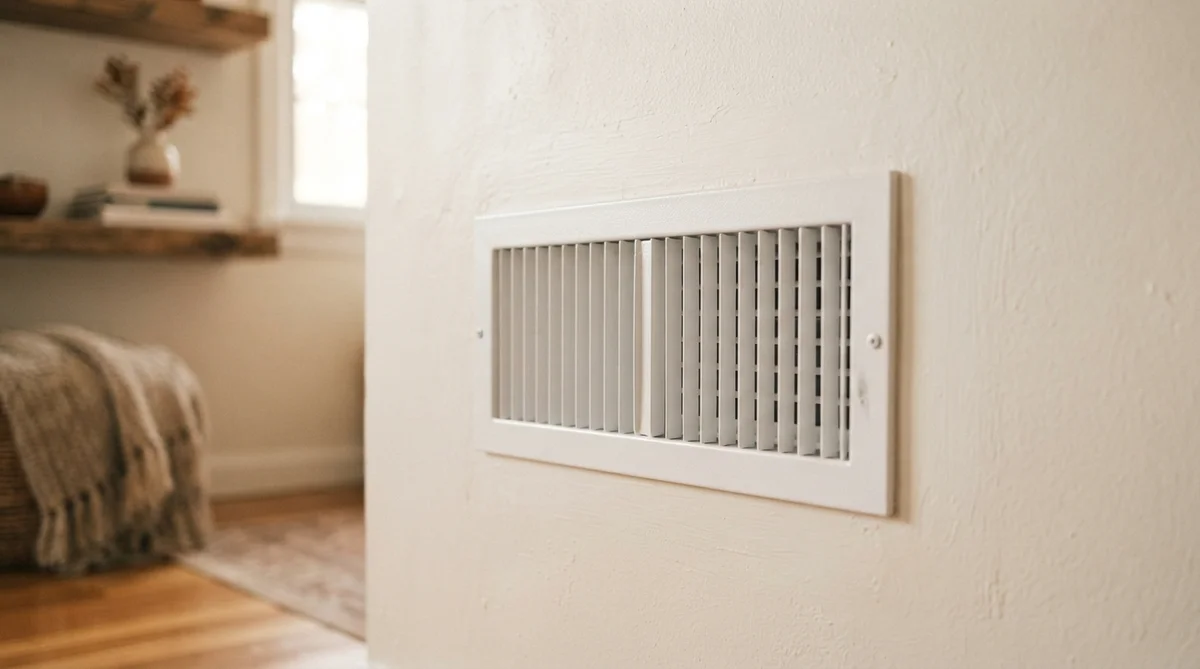
Supply ducts carry heated or cooled air from the indoor unit to each room. Vents or registers control the opening into the room, and some registers include louvers that adjust airflow direction.
Do not close many registers to force more air into another room. That can increase duct pressure and reduce system performance, while persistent room-to-room imbalance may require duct sealing, balancing, insulation, or zoning changes.
What Are Common Central Heating and Cooling System Configurations?
The best configuration depends on the home’s existing ducts, climate, fuel availability, electrical service, and heating needs. The table uses general descriptions, so confirm equipment compatibility and current efficiency ratings with a licensed contractor before replacing a system.
| Configuration | Heating source | Cooling source | Best fit | Watch for |
|---|---|---|---|---|
| Air conditioner and furnace | Gas, oil, or electric furnace | Outdoor central air conditioner | Homes with existing ducts and fuel service | Two major appliances and combustion venting |
| Heat pump and air handler | Reversible electric heat pump | Same heat pump | Homes seeking one electric heating and cooling system | Cold-weather capacity and backup heat |
| Hybrid or dual-fuel system | Heat pump plus furnace | Heat pump | Variable climates and homes with gas service | Controls must switch sources correctly |
| Air conditioner and air handler | Electric resistance or separate heat source | Central air conditioner | Homes without a gas furnace | Higher-cost electric backup heating in some regions |
How does an air conditioner and furnace combination work?
The air conditioner cools indoor air in summer, while the furnace heats it in winter. Both use the same blower and duct system, but the outdoor air conditioner and indoor furnace perform different jobs.
How does a heat pump and air handler combination work?
The heat pump provides both heating and cooling, while the air handler houses the blower, indoor coil, and often electric backup elements. This arrangement avoids a separate furnace but needs careful sizing for the local winter climate.
How does a hybrid or dual-fuel system work?
A hybrid system uses a heat pump during conditions where it operates efficiently and switches to a furnace when supplemental heat is more suitable. The thermostat or system controller makes that change according to temperature settings and equipment controls.
How does an air conditioner and air handler combination work?
An outdoor air conditioner supplies cooling, and an indoor air handler circulates air. Heating may come from electric resistance elements inside the air handler or from a separate boiler, furnace, or other appliance.
How Does the Thermostat Control Heating and Cooling?
The thermostat compares measured indoor temperature with its set point and signals the equipment to start or stop. It does not create heat or cooling, but it controls when the system runs and, on advanced models, how strongly it operates.
How do temperature sensors and heating or cooling cycles work?
When room temperature rises above the cooling set point, the thermostat calls for cooling. When it falls below the heating set point, it calls for heat, and the equipment continues until the measured temperature reaches the programmed target.
Short cycles can indicate an oversized system, restricted airflow, sensor problems, or low refrigerant. Ask a qualified HVAC technician to investigate repeated cycles instead of lowering or raising the set point repeatedly.
How do zoning and variable-speed operation work?
Zoning uses motorized dampers and separate thermostats to control different areas. Variable-speed blowers and compressors adjust output in smaller steps, which can improve temperature consistency and humidity control when the system is correctly designed.
Smart thermostats can provide schedules, remote control, and equipment alerts, but they cannot correct undersized ducts or poor insulation. Follow the wiring requirements in the thermostat and equipment manuals before changing controls.
What Affects a Central System’s Efficiency and Comfort?
Efficiency and comfort depend on the complete system, not only the furnace or outdoor unit. The U.S. Department of Energy identifies insulation, air sealing, equipment sizing, duct performance, controls, and maintenance as factors that affect household energy use.
- Equipment sizing: Oversized equipment may cycle frequently, while undersized equipment may run continuously without meeting the set point.
- Air leakage: Leaky ducts and gaps around windows or doors waste conditioned air.
- Insulation: Weak attic, wall, or floor insulation increases heat gain in summer and heat loss in winter.
- Humidity: Moist air can feel warmer in summer and may encourage mold growth on persistently damp surfaces.
- Outdoor clearance: Leaves, grass, snow, and stored items can restrict airflow around outdoor coils.
- Filter condition: A loaded filter increases resistance and can reduce airflow.
Before replacing equipment, request a load calculation and duct assessment rather than choosing a capacity from floor area alone. Energy ratings, utility rates, rebates, and refrigerant requirements change, so verify current figures in 2026 with the U.S. Department of Energy, your utility, and a licensed contractor.
What Basic Homeowner Maintenance Does Central Heating and Cooling Need?
You can handle simple observation and cleaning, but fuel, electrical, refrigerant, and combustion work should be completed by a qualified HVAC professional. Use the owner’s manual as the controlling schedule because maintenance intervals differ by equipment and operating conditions.
- Monthly: Check the filter, confirm supply and return openings are clear, and look for unusual sounds, smells, or water.
- Seasonally: Clear leaves and debris from the outdoor unit, keeping generous clearance around the coil as specified by the manufacturer.
- Before cooling season: Test the thermostat, inspect the condensate drain area, and schedule professional service if the unit struggles to start or cool.
- Before heating season: Check that vents and flues are unobstructed, test carbon monoxide alarms, and arrange furnace or boiler service.
- When performance changes: Stop using the system and call a professional for refrigerant leaks, electrical faults, fuel odors, carbon monoxide alarms, repeated safety shutdowns, or water near electrical equipment.
Keeping service records with filter sizes, installation dates, repairs, and efficiency ratings makes future troubleshooting easier. If you are preparing a property for sale, include recent HVAC records with the broader home-selling preparation checklist.